Seized Injectors
Heat, corrosion and deposits can cause an injector body to bind tightly inside the cylinder head.
Common causesSpecialist engine information
Seized, damaged and carbon-locked injectors can be difficult to remove without suitable tools and a controlled extraction method. Explore common injector problems, removal techniques and the equipment used during difficult extraction work.
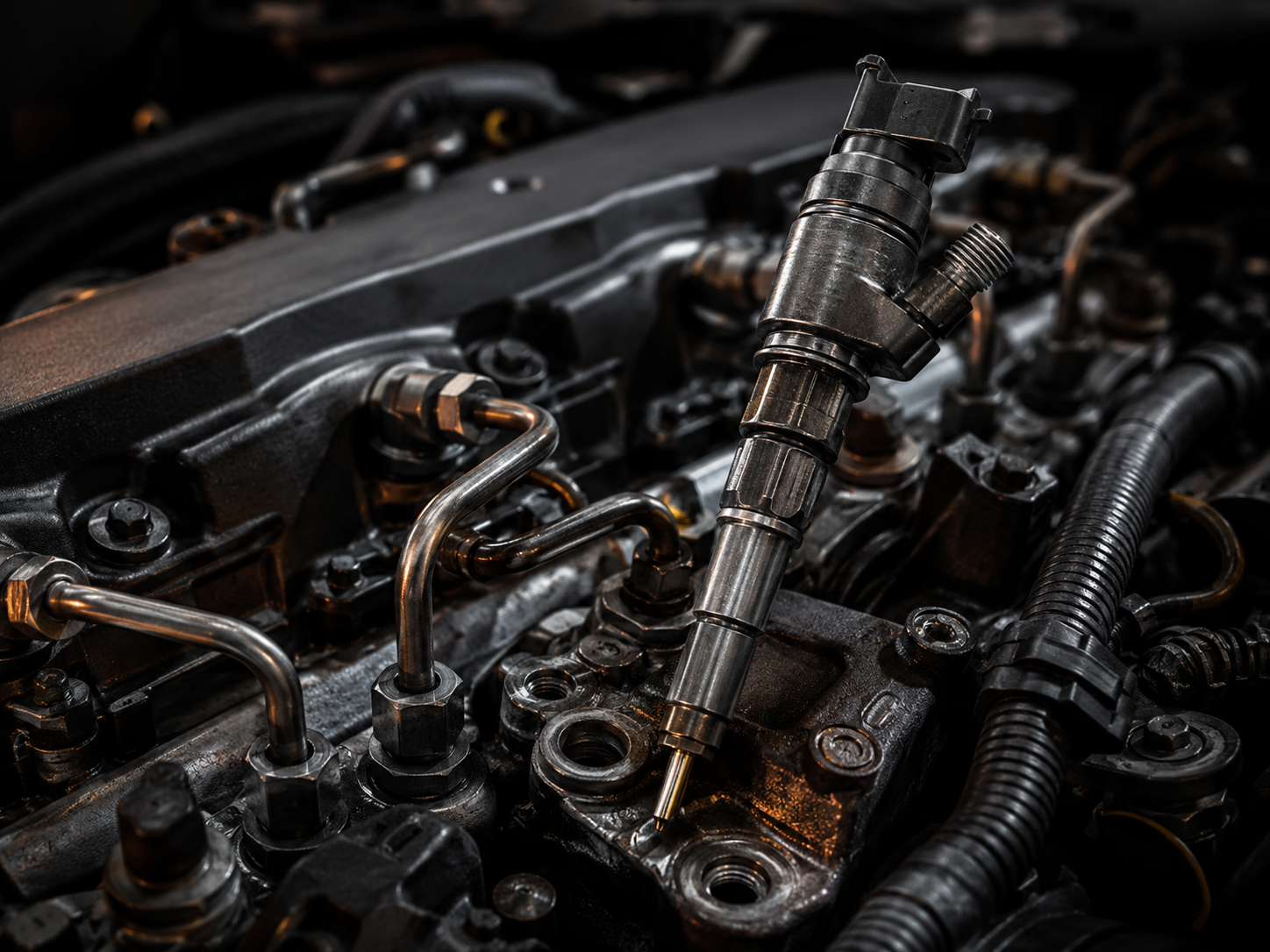
Injector removal overview
Injectors can become difficult to remove because of corrosion, carbon deposits, repeated heat cycles or damage to the injector body and surrounding components.
Excessive force can damage the injector, cylinder head, injector seat or nearby parts. The correct removal method depends on the injector condition, engine access and available tooling.
View removal situations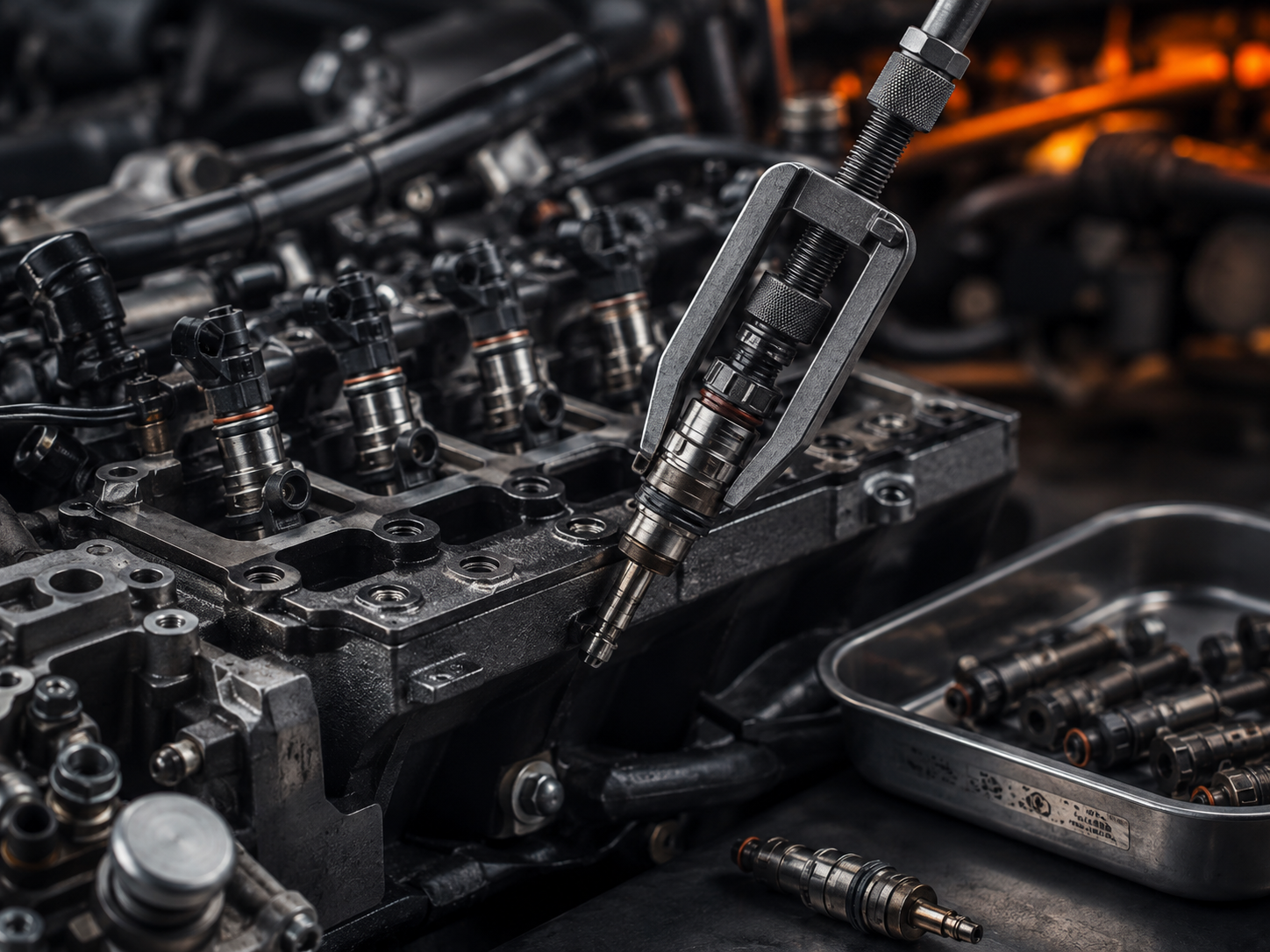
Common injector problems
Heat, corrosion and deposits can cause an injector body to bind tightly inside the cylinder head.
Common causesThe upper section or internal components may fail during removal, requiring a different extraction approach.
Removal considerationsEscaping combustion gases can create heavy deposits around the injector and make access more difficult.
Typical complicationsThreads, connectors and injector bodies may become damaged before or during an attempted removal.
Component checksRemoval methods and situations
Diesel injectors may require controlled extraction when deposits, corrosion or limited access prevent straightforward removal. The injector and cylinder head should be assessed before force is applied.
Assessment firstSeized injectors often need suitable pullers, adaptors or supporting tools to keep the extraction force aligned. Tool selection depends on the injector design and condition.
Tool selectionBroken injector sections or damaged retaining hardware can change the removal route. The remaining parts, threads and injector seat need careful inspection before extraction continues.
Damage controlRemoval process
Assess the injector condition, access, surrounding components and visible signs of carbon or corrosion.
Choose suitable pullers, adaptors or supporting tools based on the injector design and condition.
Use gradual and properly aligned force to reduce the risk of damage to the injector and cylinder head.
Check the injector bore, seat, threads and surrounding components after removal.
Every engine and injector condition is different. The correct extraction method depends on the vehicle, injector design, access and extent of damage.
Technical information
Corrosion between the injector and cylinder head can make parts bind tightly, especially after repeated heat cycling. Carbon deposits from combustion leakage can also build up around the injector and restrict movement.
Restricted access, damaged threads, broken injector bodies and previous unsuccessful removal attempts can all make extraction more complex. The condition of the injector and surrounding components should be assessed before selecting a method.
Correct alignment is important when applying extraction force. Poorly aligned force can increase the risk of damage to the injector, bore, seat or nearby engine components.
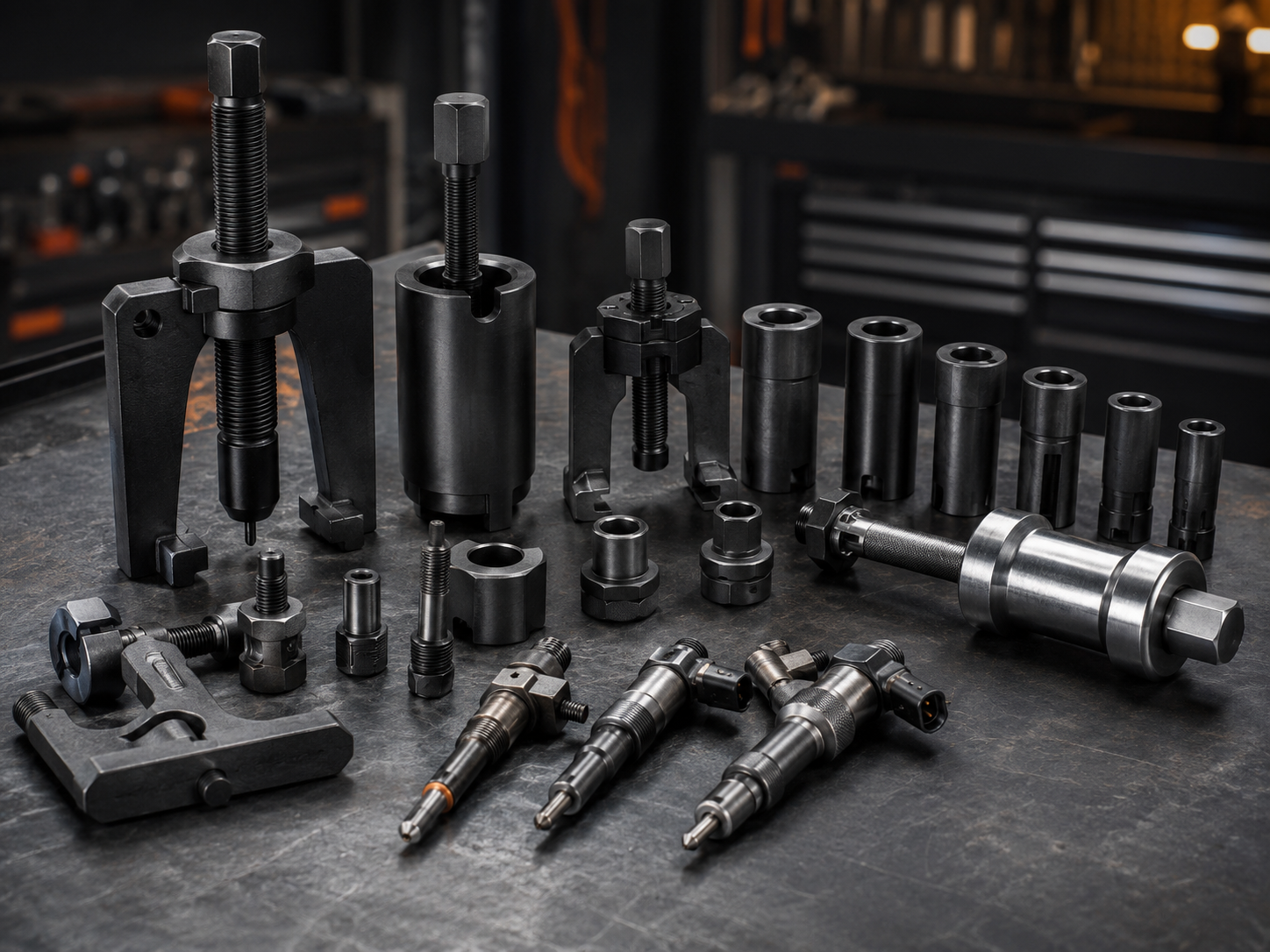
Common extraction challenges
Learn more about the causes of seized injectors, typical extraction challenges and the tools used during difficult removal work.